Security Television Network
ERDC Modeling & Simulation in Support of Unmanned Ground Vehicles
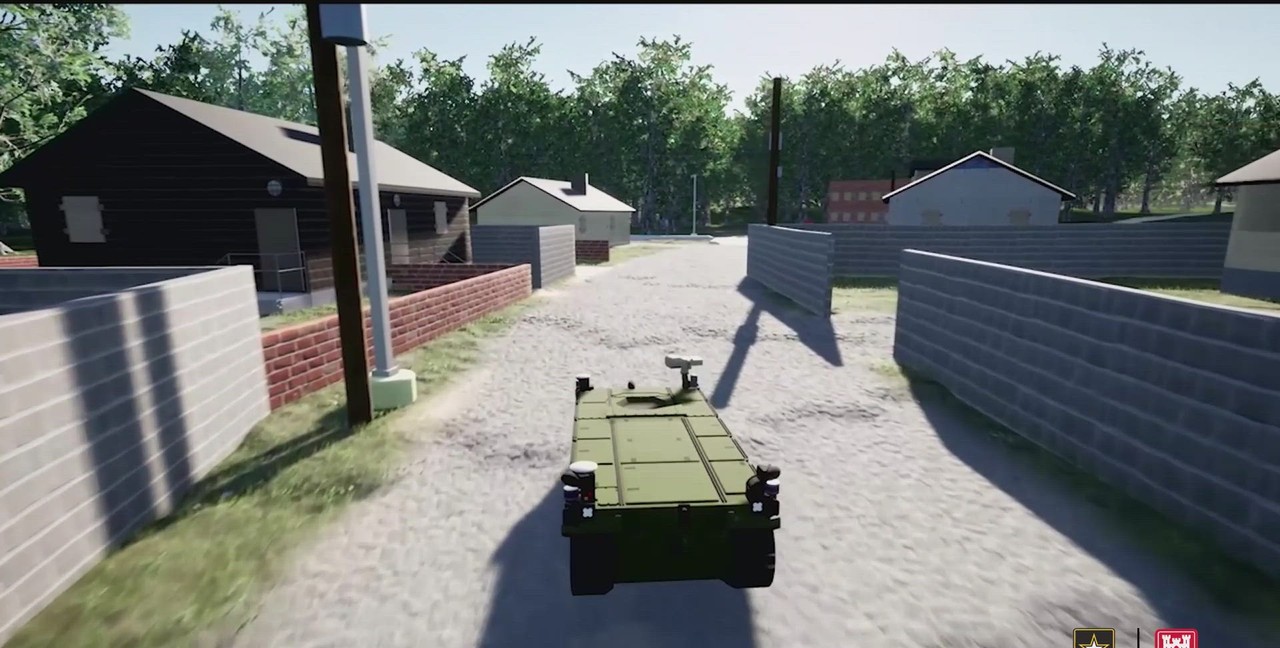
The Virtual Autonomous Navigation Environment (VANE) is a suite of modeling and simulation tools developed by the U.S. Army Engineer Research and Development Center (ERDC). Users can leverage VANE to analyze environmental effects on an autonomous vehicle system, from sensors and algorithms to tire-s
About this video
The Virtual Autonomous Navigation Environment (VANE) is a suite of modeling and simulation tools developed by the U.S. Army Engineer Research and Development Center (ERDC). Users can leverage VANE to analyze environmental effects on an autonomous vehicle system, from sensors and algorithms to tire-soil interactions and the vehicle's mechanical performance. VANE was created from ERDC's near-surface phenomenology and sensor research that supported IED detection in the conflicts in Iraq and Afghanistan and its rich expertise in ground vehicle mobility research dating back to World War II.
Unmanned ground vehicles (UGVs) must undergo rigorous testing to ensure their autonomy is reliable under challenging conditions. VANE's physics-based simulations are particularly valuable in UGV development. Using VANE, DoD researchers can explore how autonomous systems will behave in various operationally relevant environmental conditions that are often difficult to replicate with physical testing. This virtual testing capability is valuable across the complete robotic life cycle by enabling both early stage autonomy prototyping and final performance evaluation.
Attribution: Source: DVIDS Hub — U.S. Department of Defense public-affairs media
The interactive STN application appears here when JavaScript is available. Published facts and source links above remain readable without JavaScript.